Industry leaders call for smarter merchant onboarding, continuous fraud protection and more inclusive credit assessment
Manila, Philippines — The rapid adoption of digital payments in the Philippines is creating new opportunities for micro, small and medium enterprises (MSMEs), but industry leaders say stronger merchant verification and risk infrastructure will be needed to ensure more businesses can participate safely and access the financial services they need to grow.
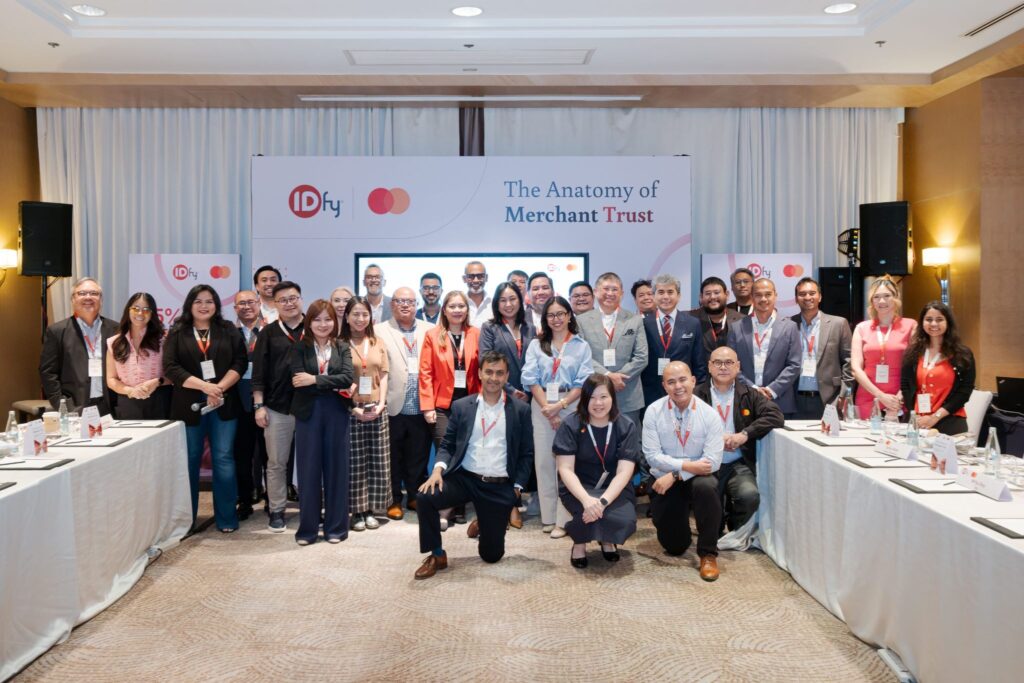
This was a key takeaway from The Anatomy of Merchant Trust, an executive roundtable co-hosted by IDfy and Mastercard in Manila, which brought together leaders from the banking, fintech and payments sectors to discuss the future of merchant trust in the country’s increasingly digital economy.
Bangko Sentral ng Pilipinas (BSP) data shows that consumer adoption of digital payment channels such as QR Ph has surpassed 57 percent. Yet while digital payments are becoming more common, many small merchants continue to face challenges when entering formal digital financial ecosystems.
A major barrier is the way merchant identity and business information are currently verified. For micro-enterprises in particular, fragmented verification processes and limited documentation can make it difficult for financial institutions to distinguish between legitimate businesses and higher-risk entities.
This can lead institutions to adopt broad risk policies that unintentionally exclude honest merchants who lack traditional credit histories.
Industry leaders said modernizing onboarding could help address the gap.
Government initiatives such as the Department of Trade and Industry’s (DTI) Tindahan Mo, e-Level Up Mo! have already helped thousands of small merchants build digital capabilities and adopt cashless payment tools. The financial sector can complement these efforts by making it easier for newly digitized businesses to enter formal financial channels.
Automated, risk-based verification can reduce dependence on paper checks and physical audits while enabling institutions to assess merchants more efficiently.
The importance of this shift was reflected in internal polling conducted during the roundtable. Business document verification and compliance checks received the highest priority for automation among participating executives, scoring 4.4 out of 5.
But building merchant trust does not stop once a business is onboarded.
With fraud threats becoming increasingly sophisticated, institutions need to continuously monitor merchant activity rather than relying solely on point-in-time checks. Real-time behavioral analytics and ongoing fraud monitoring can help identify risks such as document forgery, deepfakes and post-approval misuse while reducing unnecessary friction for legitimate businesses.
“Merchant trust is no longer a one-time verification exercise—it is a continuous lifecycle,” said Raghuraman Chandrashekhar, PH Country Head of IDfy. “As digital payments scale across the Philippines, institutions must move away from fragmented onboarding and adopt intelligent, risk-based systems that unify identity verification, alternative data, and real-time monitoring. The future of financial inclusion depends on enabling MSMEs to be onboarded quickly and safely at scale.”
The same infrastructure could also help address another longstanding challenge: access to credit.
Alternative data such as digital payment records, utility payments and transaction footprints can give lenders additional visibility into businesses that lack traditional credit histories. When combined with progressive lending models that allow credit limits to increase as merchants grow, these approaches could unlock formal financing for more than one million underserved merchants nationwide.
“Merchant trust extends well beyond onboarding. As more businesses participate in the digital economy, the industry needs to strengthen collaboration across banks, payment providers, fintechs, and technology stakeholders,” said Jason Crasto, Mastercard’s Country Manager for the Philippines. “Each stakeholder brings unique capabilities, perspectives, and expertise to the table. Through stronger public-private collaboration, shared intelligence, and advanced risk solutions, we can build a more secure, scalable, and inclusive digital ecosystem that empowers Philippine MSMEs to grow with confidence.”
For industry leaders, the next stage of digital financial inclusion will depend on creating an ecosystem where legitimate businesses can be verified efficiently, protected continuously and assessed more fairly for financial opportunities.
For more information on the roundtable discussion, visit www.idfy.ph.