
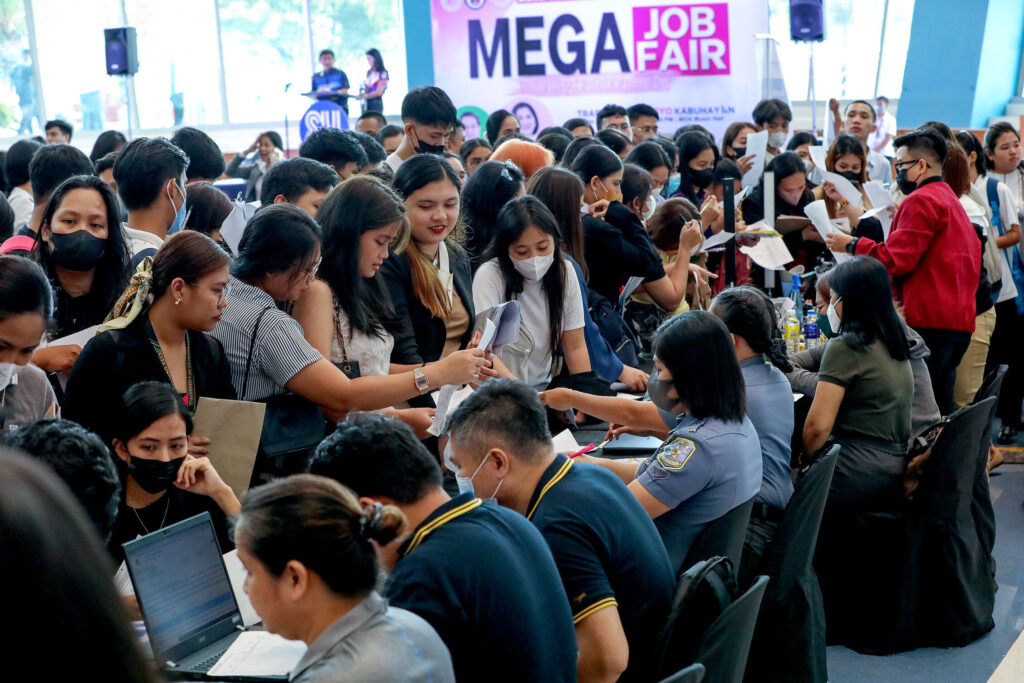
Young people across Southeast Asia are finding it increasingly difficult to secure a strong foothold in the labour market, with the Philippines among the countries facing the broader challenge.
The International Labour Organization (ILO), in its latest Global Employment Trends for Youth 2026 report, warns that the recovery in youth employment remains uneven. While headline unemployment figures may appear relatively stable in many economies, young workers continue to face barriers to entering the workforce and finding decent, sustainable jobs.
The situation is particularly important for South-Eastern Asia and the Pacific, where economic growth has not always translated into better employment opportunities for younger workers.
A Difficult Start for Young Workers
Young people generally face a tougher transition into employment than older workers.
Limited work experience, skills mismatches and a lack of suitable entry-level positions can make it harder for new graduates and first-time jobseekers to secure stable employment.
The ILO has consistently found that youth unemployment is substantially higher than unemployment among adults. Its earlier global employment research also showed that young people are around three times more likely to be unemployed than adults.
For many young people, the problem also extends beyond simply being unemployed.
Some have stopped actively looking for work, while others remain outside both employment and education or training. These young people are classified as NEET—those not in employment, education or training.
Southeast Asia Faces a Mixed Employment Picture
South-Eastern Asia has maintained relatively low overall unemployment compared with several other parts of the Asia-Pacific region.
However, this headline figure does not necessarily reflect the experience of younger workers.
ILO labour data shows that South-Eastern Asia’s overall unemployment rate has remained around the low single digits, while informal employment continues to account for a large share of jobs. In 2024, about 69.3% of employment in South-Eastern Asia was informal.
This creates another challenge for young workers: finding a job does not always mean finding a secure or high-quality one.
Informal employment can provide an immediate source of income, but workers may have less access to social protection, stable wages, formal contracts and opportunities for career progression.
The Philippine Situation
The Philippines is also dealing with the challenge of helping young people make the transition from school to work.
Recent Philippine labour statistics show that youth participation in the labour market remains relatively low. Data from the Philippine Statistics Authority also show that youth employment conditions can vary significantly by region.
For example, in the Davao Region, the labour force participation rate among people aged 15 to 24 fell from 34.3% in 2024 to 33.3% in 2025. At the same time, the youth employment rate increased to 91.1%, while the share of young people classified as NEET declined to 12%.
The figures illustrate why youth employment cannot be measured through unemployment alone. A young person who is not actively looking for work may not be counted as unemployed, even if they are struggling to find a path into the workforce.
The Skills Gap Remains a Concern
One of the biggest issues facing young workers is the gap between what they learn and what employers need.
The ILO has increasingly highlighted the importance of skills development as technology, artificial intelligence and other changes reshape workplaces.
The United Nations’ 2026 World Youth Skills Day campaign similarly points to the growing importance of digital, AI, green and social-emotional skills as young people prepare for changing labour markets. It also notes that around 40% of today’s skill sets no longer match emerging job-market requirements.
For businesses, this creates a challenge on both sides.
Employers need workers with relevant and adaptable skills, while young people need access to training and practical experience that can help them compete for available positions.
Women Face Additional Barriers
The youth employment challenge is also closely tied to gender.
Globally, young women are considerably more likely than young men to be outside employment, education or training. ILO data cited by the United Nations show that the global NEET rate among young women is more than twice that of young men.
Care responsibilities, social expectations, limited access to opportunities and workplace barriers can all affect women’s ability to enter and remain in the labour market.
This means that improving youth employment requires more than simply creating additional jobs. Policies and workplace practices must also address the barriers that prevent certain groups from accessing those opportunities.
What Better Youth Employment Could Mean for Businesses
For companies, improving youth employment is not only a social responsibility issue.
Young workers represent an important source of talent as businesses adapt to new technologies and changing consumer expectations.
Companies that provide internships, apprenticeships, entry-level opportunities and structured training can help bridge the gap between education and employment. Stronger partnerships between employers, schools, government agencies and training institutions can also help ensure that curricula remain relevant to actual workplace needs.
The ILO has emphasised the importance of policies that help young people transition into decent work, particularly for those who are NEET or struggling to find opportunities.
Turning a Labour Challenge Into an Opportunity
The latest figures underline a broader issue facing the region: economic growth alone does not guarantee that young people will benefit from the changing labour market.
For the Philippines, the challenge is to create more pathways that allow young people to move smoothly from education and training into productive, stable employment.
That means strengthening skills development, expanding access to quality entry-level jobs and making sure that growth creates opportunities that young workers can realistically access.
As technology continues to reshape the workplace, preparing the next generation of Filipino workers will be increasingly important—not only for young people’s careers, but also for the country’s long-term economic competitiveness.